Health & Safety Policy — Gardener Stoke Newington
As a professional gardener Stoke Newington provider, our priority is to protect employees, clients and the public while delivering high-quality gardening services in and around Stoke Newington. This policy sets out the general principles and specific measures that govern safe working for our team, subcontractors and visitors. It is designed to be practical, proportionate and tailored to the nature of garden maintenance Stoke Newington clients expect, encompassing landscape work, planting, pruning and light construction tasks.This policy applies to everyone working on behalf of the company. Our commitment includes regular risk assessments, documented safe systems of work, training and provision of appropriate equipment. We require that every person on site follows the instructions of a nominated supervisor and uses personal protective equipment (PPE) where necessary. Key aims are to reduce preventable incidents, manage hazards, and promote a safety-first culture across all gardening assignments.
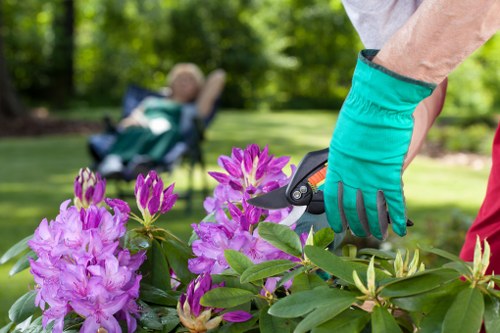 To achieve these aims we maintain clear responsibilities: senior management is accountable for policy implementation while team leaders ensure day-to-day compliance. Individual operatives are responsible for reporting hazards, using PPE such as gloves, eye protection and hearing protection, and following safe work practices. The Stoke Newington gardener team undertakes pre-job briefings and toolbox talks for tasks with higher risk, such as chainsaw work, hedge cutting and working at height.
Risk Assessment and Control Measures
All projects begin with a written or documented risk assessment; for routine garden maintenance Stoke Newington visits a simplified checklist is used, while larger landscaping jobs have a full method statement. Assessments consider ground conditions, overhead wires, underground services, public access, and the presence of chemicals or hazardous plants. Where risks are identified, we apply the hierarchy of controls: eliminate, substitute, engineer controls, administrative actions and PPE as a last resort.
Safe Use of Tools and Machinery
Equipment safety is central to our approach. Machines are maintained to manufacturer standards and inspected before use. Only trained operatives use petrol-driven tools, including mowers, strimmers and chainsaws; electricians test battery-powered tools and electrical leads. Operators follow lock-off procedures for maintenance and ensure blades are guarded and fitted correctly. A clear exclusion zone is established for noisy or hazardous activities to protect the public and colleagues.Manual handling training reduces musculoskeletal injury risks. We adopt mechanical aids where possible and instruct teams on correct lifting techniques, team lifts for bulky items and safe storage of materials. Storage areas are kept tidy to avoid trips and falls, and routes for pedestrians are kept clear during works.
Chemical Safety and Waste Management — The company uses pesticides, fertilisers and cleaning agents only when necessary and in line with product instructions. COSHH-style information is held for each substance used and operatives are trained in safe mixing, application and disposal. Spill kits are carried on larger jobs and contaminated waste is removed and disposed of responsibly. We avoid overuse of chemicals and promote organic and environmentally sensitive alternatives wherever possible.
Emergency procedures are established for accidental injury, allergic reactions and chemical exposure. First aid kits are available in vehicles and on site; trained first aiders accompany larger crews. In case of serious incidents, we follow local emergency services protocols and ensure an incident report is completed and reviewed. Continuous improvement is driven by incident analysis and learning from near-misses.
Our operative induction includes health screenings for work fitness, training records and refreshers. We emphasise the importance of hydration, sun protection and appropriate clothing in warm weather and warm layers in cold weather. Mental health is also recognised; managers support workload management and signpost employees to professional resources when needed.
Public Safety and Traffic Management
Working in residential and public spaces demands careful management of passing pedestrians and vehicles. We implement clear signage, barriers and, where required, banksman or accredited traffic marshals for vehicle access points. Tools and debris are secured overnight and dropped kerbs or pathways are kept unobstructed where possible. Our team prioritises child and animal safety, ensuring that play areas are protected from work zones.
Monitoring, Review and Continuous Improvement
We audit safety procedures regularly through supervisory checks and periodic reviews. The policy is updated to reflect changes in equipment, legislation and best practice while remaining focused on practical garden safety for a wide service area. Staff feedback is encouraged and incorporated into action plans; near misses and incidents are recorded, investigated and used to refine risk controls. As a local gardening company we balance efficient service delivery with a robust safety culture to reduce harm and provide reassurance to clients.Key safety commitments:
- Carry out and document risk assessments before work starts
- Ensure all operatives are trained and competent for their tasks
- Maintain tools and vehicles to safe standards
- Use PPE and protective measures consistently
- Report, investigate and learn from incidents